- Buying property in Istanbul
- Areas of the European part of Istanbul
- Buying property and houses in Sariyer
- Buying property and houses in Besiktas
- Buying property and houses in Kagithane
- Buying property and houses in Bakirkoy
- Buying property and houses in Sisli (Şişli)
- Buying property and houses in Buyukcekmece
- Buying property and houses in Zeytinburnu
- Properties for Sale in Beyoglu Istanbul
- Buying property and houses in Bahçelievler
- Properties for Sale in kucukcekmece Istanbul
- Buying property and houses in Beylikduzu
- Buying property and houses in Bagcilar
- Buying property and houses in AyupSultan
- Buying property and houses in basaksehir
- Buying a property and house in Avcilar
- Buying property and houses in Esenyurt
- Buying property and houses in Arnavutkoy
- Buying property and houses in Sultangazi
- Buying property and houses in Gungoren
- Buying property and houses in Bayrampasa
- Buying property and houses in Gaziosmanpasa
- Buying property and houses in Esenler
- Buying property and houses in Fatih
- Buying property and houses in Çatalca
- Buying property and houses in Silivri
- Areas of the Asian side of Istanbul
- Buying property and houses in umraniye
- Buying property and houses in Atasehir
- Buying property and houses in Beykoz
- Buying property and houses in Uskudar
- Buying property and houses in Kadikoy
- Buying property and houses in Maltepe
- Buying property and houses in Tuzla
- Buying property and houses in Kartal
- Buying property and houses in Pendik
- Buying property and houses in Sultanbeyli
- Buying property and houses in cekmekoy
- Buying property and houses in sancaktepe
- Buying property and houses in sile
- Buying property and houses in Adalar
- Areas of the European part of Istanbul
- Buying Property in Turkey with Installments
- Buying a residential apartment (normal) in Türkiye
- Buying a residential complex (city) in Türkiye
- Buying office property in Türkiye
- Buying commercial property in Türkiye
- Buying a villa in Türkiye


Turkey Residence Permit by Buying a $200,000 Property: Requirements & 2026 Regulations


If you are planning to obtain a Turkey Residence Permit by Buying a $200,000 Property, you should know that under the latest regulations, effective October 16, 2023, the minimum property value required to qualify for a renewable residence permit through property ownership was increased to US$200,000. This requirement remains unchanged in 2026 and applies throughout Turkey. All foreign nationals purchasing property after this date must comply with the updated regulations.
The Turkey Property Residence Permit (Taşınmaz İkameti) remains one of the most reliable residence options for foreign nationals who wish to live, invest, or protect their capital in Turkey. However, obtaining this residence permit involves more than simply purchasing a $200,000 property. The property’s actual market value, the official property valuation report (Ekspertiz), the proper registration of the Title Deed (Tapu), and compliance with the regulations of the Turkish immigration authorities all play a crucial role in the successful approval of your application
In this comprehensive guide, we will cover everything you need to know about obtaining a Turkey Residence Permit by Buying a $200,000 Property, including the 2026 regulations, eligibility requirements, required documents, application process, renewal procedures, benefits, limitations, and the key considerations you should understand before purchasing property, helping you apply with confidence and minimize potential risks.
Comparison of the Previous and Current Turkey Residence Permit by Buying Property Rules
The Evolution of Turkey Property Residence Permit Rules: From $75,000 to $200,000
Before October 16, 2023, foreign nationals could obtain a Turkey Property Residence Permit by purchasing a residential property worth at least US$75,000 in metropolitan cities or US$50,000 in other cities. However, under the latest regulations issued by the Turkish immigration authorities, any property with a Title Deed (Tapu) transferred on or after October 16, 2023 must have a minimum value of US$200,000. This value must be confirmed in both the Title Deed (Tapu) and the official Property Valuation Report (Ekspertiz) to qualify for a residence permit.
It is important to note that this regulation is not retroactive. Therefore, foreign nationals who obtained their property residence permit before the new regulation came into effect based on the previous minimum property value of US$75,000 are not subject to the new US$200,000 requirement when renewing their residence permit. Their renewal applications will continue to be processed under the regulations that were in effect when their residence permit was originally issued.
Property Requirements for a Turkey Property Residence Permit
Not every property in Turkey qualifies for a Turkey Property Residence Permit. To be eligible, the purchased property must meet the requirements established by the Turkish Directorate General of Migration Management (Göç İdaresi). The most important requirements are listed below.
-
Residential Property Use
The purchased property must be officially registered as a residential property. Purchasing a shop, office, or any other type of commercial property does not qualify for a Turkey Residence Permit by Buying a $200,000 Property. While commercial properties may be eligible for obtaining Turkish citizenship through the US$400,000 investment program, they cannot be used to obtain a property residence permit, which is limited to residential properties.
-
A Minimum Property Value of US$200,000 Must Be Recorded in Both the Title Deed and the Property Valuation Report
One of the most important points buyers should pay attention to is the value recorded in the Title Deed (Tapu) and the official Property Valuation Report (Ekspertiz). One of the most common mistakes among applicants is confusing the property’s actual market value with the value recorded in the Title Deed.
In Turkey, it has traditionally been common for some property owners to declare a lower value in the Title Deed to reduce taxes. Therefore, when purchasing a resale property, buyers should make sure that both the Title Deed and the Property Valuation Report can legally reflect a value of at least US$200,000.
Before any payment is made, the experienced consultants at Hometurkie verify whether the property’s Title Deed and Property Valuation Report meet the legal requirements for obtaining a Turkey Property Residence Permit.
Legal Requirement: On the date of the Title Deed transfer, the value recorded in the Title Deed (Tapu) must be equal to at least US$200,000 based on the official exchange rate announced by the Central Bank of the Republic of Turkey (TCMB). The official Property Valuation Report (Ekspertiz) must also confirm the same value.
-
The Property Must Not Be Located in a Restricted Area
Due to the high concentration of foreign residents, the Turkish immigration authorities have designated more than 1,169 neighborhoods across the country as restricted areas for issuing property residence permits. Purchasing a property in one of these neighborhoods does not qualify for a residence permit, even if the property’s value exceeds US$1 million.
You can find the complete list of these locations in our article, “Restricted Areas in Turkey for Property Residence Permits.”
-
The Property Must Be Ready for Occupancy (Have an Occupancy Permit – İskan)
Off-plan properties and under-construction projects that have only been transferred to the buyer through a notarized sales contract and do not yet have an Occupancy Permit (İskan) are not eligible for a property residence permit.
Please note that you cannot apply for a property residence permit until the official Title Deed (Tapu) has been issued in your name and the building has received its Occupancy Permit (İskan).
Important
To qualify for a Turkey Property Residence Permit, the property must have both an official Title Deed (Tapu) and a valid Occupancy Permit (İskan). In some cases, even years after construction has been completed, an Occupancy Permit has not been issued due to technical deficiencies or administrative reasons. Purchasing such properties does not qualify the buyer for a property residence permit.
Before you purchase a property, Hometurkie carefully reviews the Title Deed, Occupancy Permit, and all other legal requirements to ensure the property is fully eligible for a Turkey Residence Permit by Buying a $200,000 Property.
Who Can Obtain a Turkey Residence Permit by Buying a $200,000 Property?
The short answer is yes—but there are several important requirements and conditions you should be aware of.
-
The Title Deed Must Be Registered in One Person’s Name
To qualify for a Turkey Property Residence Permit, the Title Deed (Tapu) must be issued in the name of a single primary applicant. Purchasing a property under joint ownership does not qualify for a property residence permit, even if each owner’s share is worth more than US$200,000. In such cases, none of the co-owners are eligible to obtain a Property Residence Permit (Taşınmaz İkameti) based on that property.
-
What Type of Residence Permit Can the Spouse and Children Under 18 Receive?
The legal spouse and children under the age of 18 of the property owner may apply for a Family Residence Permit (Aile İkameti) based on the same property, provided that its value is at least US$200,000. This allows them to legally reside in Turkey together with the property owner.
-
What About Children Over the Age of 18?
Under Turkish immigration law, children aged 18 or older are considered independent adults and are no longer included in their parents’ Family Residence Permit application, even if they are unmarried or financially dependent on their family.
To obtain legal residence in Turkey, they must apply independently through an eligible residence category, such as a Student Residence Permit, a Work Residence Permit, or by purchasing a qualifying property with a minimum value of US$200,000.
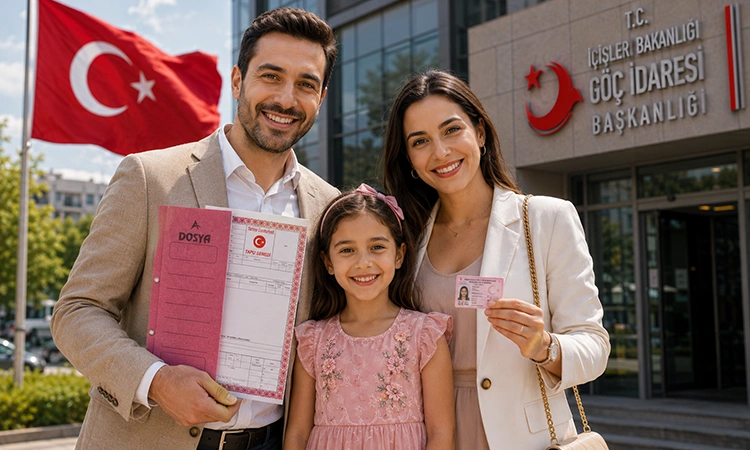
Why Is a Turkey Residence Permit by Buying Property One of the Best Immigration Options?
A Turkey Residence Permit by Buying Property is more than just a residence permit. It offers a combination of investment security, the legal right to live in Turkey, long-term asset protection, and valuable opportunities for you and your family. Some of the key benefits include:
-
Guaranteed Residence Permit Renewal
Your Turkey Property Residence Permit can be renewed with confidence as long as you continue to own the property and reside in it. Depending on the applicable regulations, the permit is typically renewed every one or two years, with no risk of rejection as long as all legal requirements continue to be met.
-
Eligibility to Apply for Turkish Citizenship
If you live in Turkey legally and continuously under this residence permit for five years and do not exceed the permitted period of absence from the country, you may become eligible to apply for Turkish citizenship. You can learn more about the requirements in our “Turkish Citizenship” guide.
-
Protection and Growth of Your Investment
Turkey’s real estate market, particularly in major cities such as Istanbul, has shown strong long-term growth in property values. By purchasing a qualifying property, you not only obtain a residence permit but also invest in a market with significant long-term potential.
-
Free Education for Your Children
Children of property residence permit holders can enroll in public schools in Turkey free of charge while legally residing in the country.
-
Better Opportunities When Applying for Schengen, UK, and Canadian Visas
Holding a Turkey Property Residence Permit and maintaining an active Turkish bank account can strengthen your visa application profile when applying for Schengen, UK, or Canadian visas from within Turkey.
Required Documents for a Turkey Property Residence Permit in 2026
Preparing your documents accurately is one of the most important factors in the success of your residence permit application during your residence permit appointment (Randevu). Missing or incomplete documents may result in a 30-day period to provide the required documents. Failure to complete your file within this period may lead to the rejection of your application.
There is no need to worry about the administrative procedures. From property purchase and Title Deed (Tapu) transfer to banking formalities and your residence permit application, the legal team at Hometurkie manages every step of the process, allowing you to invest and obtain your residence permit with confidence.
-
Property Documents
- Original and copy of the Title Deed (Tapu): The property must be free of mortgages, liens, or legal restrictions.
- Numarataj Certificate: An official document issued by the local municipality confirming the property’s registered address.
- Address Registration Certificate (Nüfus Registration): Issued by the Population Directorate, confirming that your residence has been registered at the property address.
- Official Property Valuation Report (Ekspertiz): Prepared by an appraisal company licensed by the Capital Markets Board of Turkey (SPK) to verify both the property’s market value and its residential status.
- Mandatory Earthquake Insurance (DASK): A valid earthquake insurance policy for the property.
-
Applicant and Family Documents
- Residence Permit Application Form (Randevu Form): Completed online through the Turkish immigration system.
- Original passport, birth certificate, marriage certificate (if applicable), and certified Turkish translations: Your passport must be valid for at least six months beyond the requested residence period, and a copy of the page containing your latest entry stamp is required. Documents proving marriage and family relationships must be officially translated into Turkish and certified by a Turkish Notary Public (Noter) or legalized with an Apostille, where applicable.
- Valid Health Insurance: Health insurance covering the applicant for the requested residence period.
- Biometric Photographs: Four recent passport-size biometric photographs with a white background, taken within the last six months.
How to Buy Property and Obtain a Turkey Residence Permit: Step-by-Step
Obtaining a Turkey Residence Permit by Buying a $200,000 Property involves much more than simply selecting a property. Completing the legal, banking, and administrative procedures correctly is essential to protecting your investment and ensuring the successful approval of your residence permit application.
From your first property viewing to receiving your residence permit card, the legal team at Hometurkie will guide you through every step of the process.
1. Choose a Property That Qualifies for Both Residence and Investment
The first and most important step is selecting a property that not only offers strong investment potential but also fully complies with the legal requirements for obtaining a Turkey Property Residence Permit.
The experts at Hometurkie carefully evaluate the Title Deed, location, official property valuation, property type, and all legal requirements before recommending properties that are suitable for both investment and residence permit purposes.
2. Obtain a Tax Number and Open a Bank Account
Once you have selected a property, you must obtain a Turkish Tax Identification Number (Vergi Numarası). This number is issued by the Turkish Tax Office and is required for opening a bank account, transferring funds, completing the Title Deed transfer, and carrying out other financial and administrative procedures.
After obtaining your tax number, USD, EUR, and TRY bank accounts are opened in your name at a reputable Turkish bank, such as Ziraat Bankası or VakıfBank, allowing the purchase to proceed in accordance with Turkish banking regulations.
3. Obtain the Currency Exchange Certificate (DAB)
Under the regulations of the Central Bank of the Republic of Turkey (TCMB), foreign property buyers must convert their foreign currency into Turkish Lira through a Turkish bank.
After the conversion is completed, a Currency Exchange Certificate (Döviz Alım Belgesi – DAB) is issued. This certificate is a mandatory document required for the Title Deed (Tapu) transfer.
Hometurkie manages the entire banking process and the issuance of the DAB certificate to ensure that your funds are transferred safely and in full compliance with Turkish regulations.
4. Complete the Official Title Deed (Tapu) Transfer
Once all documents have been prepared and approved, the Title Deed transfer application is submitted through the Turkish Land Registry and Cadastre Directorate (Tapu ve Kadastro). An appointment is then scheduled for both parties to complete the transfer.
On the transfer date, after all documents have been verified and the final payment has been completed, the official Title Deed (Tapu) is issued in the buyer’s name, legally transferring ownership of the property.
5. Submit the Residence Permit Application and Attend the Appointment (Randevu)
After receiving the Title Deed (Tapu) and obtaining the required municipal documents, including the Numarataj Certificate, Hometurkie’s legal team submits your residence permit application through the e-Ikamet system and schedules your immigration appointment (Randevu).
On the appointment date, you will visit the immigration office to submit your documents. Once your application is approved, your residence permit card is typically delivered to your registered address within 2 to 3 weeks.
From selecting the right property to transferring the Title Deed (Tapu) and receiving your residence permit card, every legal, banking, and administrative step is professionally managed by the experienced team at Hometurkie, ensuring a smooth, secure, and stress-free experience.

Turkey Property Residence Permit or Turkish Citizenship? A Complete Comparison of the Two Investment Options
Many foreign investors assume that purchasing a US$200,000 property and investing US$400,000 in real estate lead to the same outcome. In reality, these two programs differ significantly in their eligibility requirements, benefits, limitations, and final results.
Understanding these differences will help you choose the option that best matches your immigration goals, investment strategy, and long-term plans in Turkey.
If your primary goal is to live in Turkey and obtain long-term legal residence, a Turkey Residence Permit by Buying a $200,000 Property is a cost-effective and practical option. However, if your objective is to obtain Turkish citizenship and a Turkish passport in the shortest possible time and enjoy the full rights of Turkish citizens, the US$400,000 Citizenship by Investment Program is the more suitable choice.
To learn more about the eligibility requirements, application process, costs, and the latest citizenship regulations, we recommend reading our guide, “Turkish Citizenship by Buying Property“
New Property or Resale Property? Which Is Better for a $200,000 Property Residence Permit?
One of the most important decisions for applicants seeking a Turkey Residence Permit by Buying a $200,000 Property is whether to purchase a newly built property or a resale property. Both options can qualify for a residence permit, but each has important differences. Understanding these differences can help you avoid potential legal and financial issues.
The Advantages of Newly Built Properties
One of the biggest advantages of purchasing a newly built property from a reputable construction company is that the actual purchase price is usually recorded in the official Title Deed (Tapu).
Therefore, if the property’s purchase price is US$200,000, the same amount (or its equivalent in Turkish Lira based on the official exchange rate announced by the Central Bank of the Republic of Turkey (TCMB) on the transfer date) is generally recorded in the Title Deed, making the residence permit application process much smoother.
The Challenges of Buying a Resale Property
For many privately owned resale properties, the value recorded in the original Title Deed (Tapu) may differ significantly from the property’s current market value.
One reason is that recording the actual sale price may require the seller to pay capital gains tax. As a result, some sellers may prefer not to record the property’s full market value in the Title Deed.
However, if the seller has owned the property for more than five years, they are generally exempt from capital gains tax under Turkish tax regulations. In such cases, recording the property’s actual sale price in the Title Deed is usually much easier.
Which Is Better for Obtaining a Turkey Property Residence Permit?
Although newly built properties generally make it easier to record the property’s actual value in the Title Deed, the number of completed units available for sale is often more limited because many units are sold during the construction phase.
On the other hand, the resale market offers a much wider selection of properties in terms of location, size, and price, making it possible to find excellent investment opportunities with careful evaluation.
The key point when purchasing a resale property is to verify before making any payment that a value of at least US$200,000 can be recorded in the Title Deed (Tapu) and confirmed by the official Property Valuation Report (Ekspertiz). This is one of the most important factors in the success of a property residence permit application and should always be reviewed carefully from both a legal and financial perspective.
Important:
The actual amount you pay for the property is not the determining factor for obtaining a Turkey Property Residence Permit. The value recorded in the Title Deed (Tapu) and confirmed in the official Property Valuation Report (Ekspertiz) must be at least US$200,000. Always verify this before paying any deposit.

The Cost of a Turkey Residence Permit by Buying a $200,000 Property in 2026 (Including All Additional Expenses)
Many applicants assume that obtaining a Turkey Residence Permit by Buying a $200,000 Property only requires paying the purchase price of the property. However, in addition to the property’s purchase price, you should also budget for the legal costs of the Title Deed (Tapu) transfer, administrative fees, and the expenses related to your residence permit application.
In general, the additional costs associated with purchasing a property and obtaining a residence permit are typically around 5% to 7% of the property’s value. The exact amount may vary depending on the property’s value, the number of family members included in the application, and certain variable expenses such as health insurance.
Below, we provide a clear breakdown of all the main costs involved.
Property Purchase and Title Deed (Tapu) Transfer Costs
Residence Permit Application Costs
After the Title Deed (Tapu) has been transferred, you must also pay the official fees required to submit your residence permit application. The main expenses include:
- Residence Permit Fee (İkamet Harcı): For Iranian citizens, the fee in 2026 is US$80 for a one-year residence permit and US$140 for a two-year residence permit (payable in Turkish Lira based on the official exchange rate).
- Residence Permit Card Fee (Kimlik Card): The fee for issuing the residence permit card in 2026 is TRY 964 per person.
- Mandatory Health Insurance (Sağlık Sigortası): The insurance premium depends on the applicant’s age, the insurance provider, and the city of residence. Applicants under the age of 18 and over 65 are exempt from the health insurance requirement.
- Document Translation and Certification: Official translation and notarization of documents such as passports and birth certificates, and for family applications, marriage certificates and birth certificates, are also part of the application costs. The cost is typically TRY 1,500 to TRY 2,500 per document.
Important: Many of the costs listed above are one-time expenses paid only during the property purchase or residence permit application process. In addition, expenses such as health insurance, document translation, and the Property Valuation Report (Ekspertiz) vary depending on the applicant’s circumstances and the property’s characteristics. For this reason, it is recommended to obtain an accurate estimate of the total costs before purchasing a property.
Why Choose Hometurkie for Your Turkey Property Residence Permit?
Obtaining a Turkey Residence Permit by Buying a $200,000 Property involves much more than choosing the right home. Verifying the property’s legal status, transferring funds correctly, completing the Title Deed (Tapu) transfer, preparing the residence permit application, and managing the administrative procedures all require experience and a thorough understanding of Turkish regulations. Choosing a professional team can help you avoid costly mistakes.
At Hometurkie, we guide you through every stage of the process—from your initial consultation to receiving your residence permit card—with complete transparency and dedicated support.
Comprehensive Legal Review Before You Buy
Before any property is presented for viewing, the legal team at Hometurkie reviews its Title Deed, residential status, any outstanding debts or legal restrictions, and confirms that it is not located in a restricted area for residence permits.
Residence Permit Eligibility Verification Before Payment
Before you pay a deposit or transfer any funds, we verify that a minimum value of US$200,000 can be recorded in the official Title Deed (Tapu) and confirmed in the Property Valuation Report (Ekspertiz), ensuring that the selected property qualifies for a residence permit.
Guidance Throughout the Property Purchase Process
From obtaining a Tax Identification Number (Vergi Numarası), opening a bank account, and securing the Currency Exchange Certificate (DAB), to completing the Title Deed (Tapu) transfer, the specialists at Hometurkie will assist you every step of the way.
Residence Permit Application and Case Management
Our team handles the entire residence permit process, including submitting your application through the immigration system, preparing the required documents, scheduling your Randevu appointment, and following up on your application until your residence permit card is issued.
After-Sales Support
Our services do not end once the Title Deed (Tapu) has been transferred. We also assist with utility subscriptions for water, electricity, and natural gas, obtaining the Numarataj Certificate, providing guidance on administrative procedures, and answering any questions you may have after purchasing your property.